The TachoTools Smart Allowances module eliminates the complexity of manual travel expense tracking. By performing automated calculations based on verified tachograph records, our engine ensures that overnight stays, meals, and driving time allowances are 100% accurate and fully compliant with EU labor regulations.
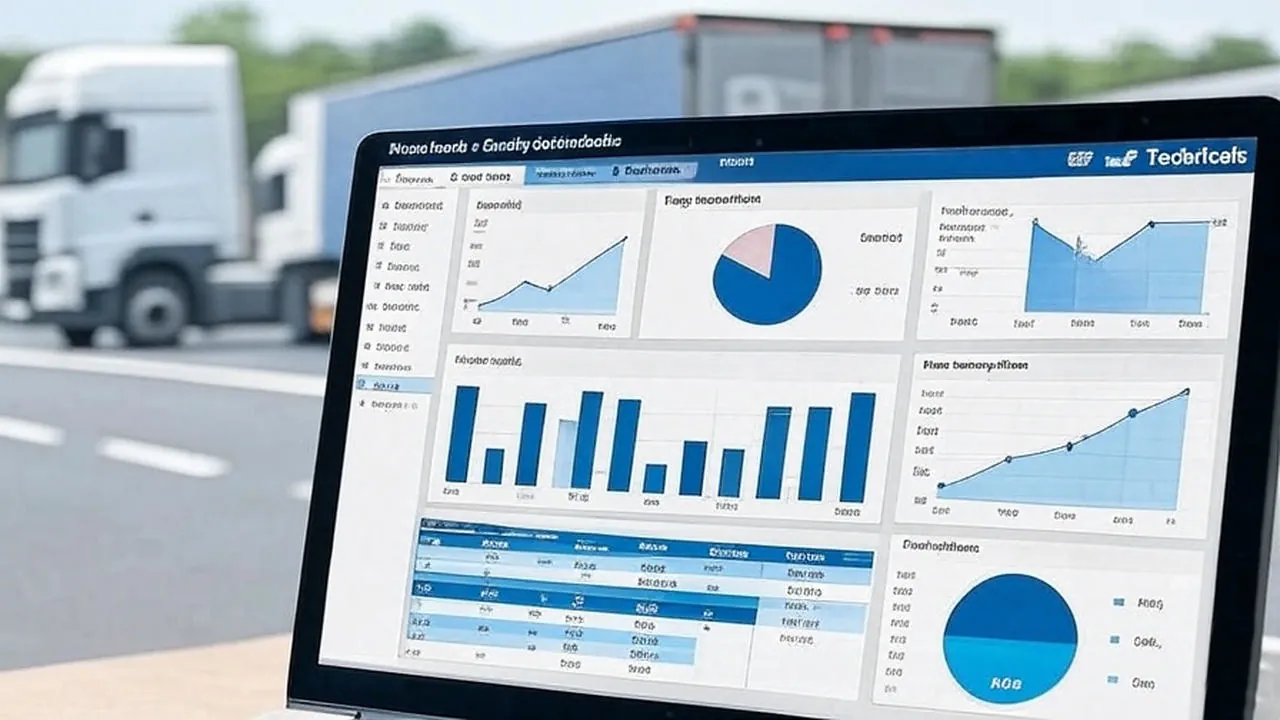
From Tachograph Signatures to Payroll-Ready Reports
Manual allowance sheets are prone to errors that lead to tax liabilities and driver disputes. The TachoTools App performs a forensic analysis of tachograph files, automatically identifying overnight periods, border crossings, and effective working hours to produce a legally-defensible expense summary.
Why Logistics Leaders Choose Automation
Time Efficiency
Reduce the time spent on monthly per diem processing by up to 90% through bulk automated analysis.
Tax Audit Protection
Every allowance is linked to a specific tachograph activity, providing an unalterable audit trail for tax authorities.
Versatile Solutions for Every Operational Role
Our smart calculation system is engineered to satisfy all levels of the transport hierarchy:
- Owner-Operators: Justify business expenses and tax deductions without complicated spreadsheets.
- HR Departments: Automate payroll supplements based on real-time country codes and rest periods.
- Fleet Managers: Monitor travel costs per route and optimize operational budgeting.
- External Auditors: Access structured, verifiable data for high-volume compliance reviews.
Economic Impact: Beyond the Spreadsheet
The TachoTools Smart Allowances module is a business intelligence tool. It provides a dynamic overview of labor-related costs, helping your organization anticipate deviations, optimize international missions, and ensure 100% transparency during official inspections.
Automation is only as good as the facts underneath it
An automatic calculation inherits every gap in the record without flagging it, which is what makes it both useful and dangerous. A missing country symbol doesn't produce an error message — it produces a plausible figure that happens to be wrong.
So three checks are worth building into the monthly routine, and none of them is about the allowance itself:
- Is the period complete for every driver, with no holes between downloads?
- Are the country entries there at the start and end of each working day?
- Are there any manual entries left half-finished — begun and not confirmed?
Those three cover the overwhelming majority of allowance disputes, and all three are visible in the file before anyone calculates anything. The cheapest allowance correction is the one made while the period is still open.
Rates change. Set a date to review them
This is the failure mode of every automated allowance scheme, and it is entirely silent. Nothing breaks when a rate changes — the system simply keeps paying the old one, month after month, with complete precision.
Two consequences follow, and they point in opposite directions:
- Underpaying accumulates quietly into a claim, with interest attached and a very clear paper trail proving how long it went on.
- Overpaying beyond what the applicable scheme allows tax-free doesn't stay a generosity: the excess is treated as pay, with everything that follows.
Neither is detected by the software, because from its point of view nothing went wrong. One diary entry a year to review the rates catches both — and it is the single cheapest control in the whole process.
In short
Take the facts from the record automatically; maintain the rates deliberately. The file tells you when and where. It never tells you how much.
An allowance that does the job of a wage stops being an allowance
Worth stating plainly, because it is the expensive failure in this area and it develops slowly. An allowance reimburses a cost; pay rewards work. When the amount stops tracking any actual cost and starts making up the bulk of what somebody earns, the label on the payslip stops mattering.
What gets examined then is the function the payment actually performs — and the evidence for that function is precisely the record: which days, which countries, how long away. Ironic, but useful: the same file that automates the calculation is what defends it.
So the honest self-test, worth running once a year: strip out everything that isn't pay. Does what remains still make sense as the wage for this job? If it doesn't, the problem isn't the calculation — and no scheme, however automated, will fix it.
Three checks before the month closes
- Every driver's period complete, with no holes between downloads.
- Country entries present at the start and end of each working day.
- No manual entries left unconfirmed.
All three are visible in the file before anyone calculates anything — and an allowance corrected while the period is still open costs nothing at all.
Where the border data actually comes from
Cross-border allowances hang on one fact — which country, at which point in time — and this is where the second-generation smart tachograph genuinely changed things. The border crossing itself is now recorded automatically.
But two things are still manual, and they are the ones that produce gaps:
- The country symbol at the start and end of the working day. The unit does not enter these for the driver. It never will.
- Manual entries for periods when the card wasn't in the slot.
The awkward consequence for a mixed fleet: an older unit records none of it automatically. Two vehicles in the same yard can require two different procedures, and a driver moving between them carries the habit from one into the other. What you get is a complete set of border crossings alongside a missing country symbol at six in the morning on your own premises — and it's the missing symbol that breaks the allowance calculation.
The record supplies the when and where. It doesn't supply the rate
Worth separating two things that get merged, because the confusion produces both overpayments and awkward questions. A tachograph file establishes facts: which days, which hours, which country, where the vehicle stood. What it never establishes is how much any of that is worth.
The rate comes from somewhere else entirely — the applicable scheme, the collective agreement or contract, and the tax rules of the country whose treatment applies. Those change without the file changing at all, which is precisely why a calculation set up once and never revisited drifts quietly out of date.
So "smart" here means something narrower and more useful than it sounds: the facts are taken from the record automatically, and the rates are maintained deliberately. A system that invents rates is not being clever. A system that makes you retype the facts is not saving you anything.
Master Your Fleet's Financial Workflow
Ready to Automate Your Travel Allowances?
Stop wasting hours on manual calculations. Join the digital revolution in fleet expense management with TachoTools.