The calculation of driver allowances is one of the most sensitive administrative processes in road transport. Beyond simple mileage, companies must now navigate the complex EU Posting of Drivers Directive, which requires precise tracking of working time across different borders to ensure minimum wage compliance.
By leveraging raw digital tachograph data, allowances can be calculated with forensic accuracy. Parsing .DDD and .TGD files allows for an objective settlement process, eliminating manual entry errors and protecting the company during labor inspections or social audits.
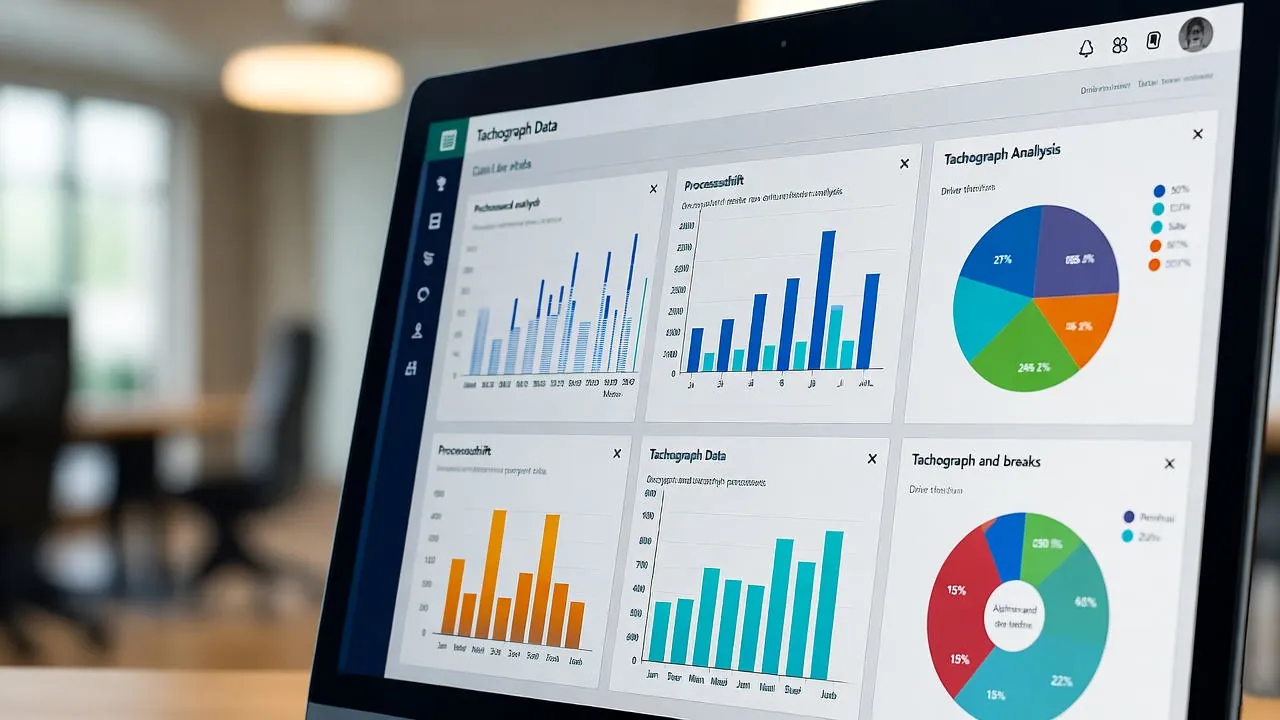
The Legal Basis: Why Tachograph Data is Final
In many EU jurisdictions, the tachograph is considered the "official truth" for labor courts. Relying on its records for payroll and per diems provides a shield against disputes:
Automated Border Tracking
The Mobility Package mandates recording border crossings. Our tool uses this data to calculate specific country-based allowances automatically.
Night Shift Differentials
Identify precisely when a driver enters nocturnal hours, triggering mandatory night-work pay increments according to local collective agreements.
Key Components of Modern Allowance Settlements
A compliant allowance report must cross-reference multiple data points found within the driver card memory:
- Per Diems (Daily Subsistence): Calculated based on the total time spent outside the home base.
- Overnight Stays: Verified through 9h/11h daily rest periods recorded in the vehicle.
- Availability Pay: Tracking "Waiting Times" at loading docks, often paid at a different rate than active work.
- International Posting: Adjusting the hourly rate based on the country of operation to meet EU minimum wage requirements.
Streamline Your Payroll Workflow
The TachoTools allowance module simplifies what used to take days of spreadsheet work. By uploading your files to our Compliance Dashboard, you get:
- Objective Evidence: A transparent audit trail for every euro paid.
- Conflict Resolution: Clear reports that drivers can review, reducing friction regarding hours worked.
- Export Readiness: Data formatted for direct import into popular payroll and accounting software.
Eliminate Manual Settlement Risks
Switch to an automated system that protects your company from labor disputes and social security audits. Stop guessing and start calculating.
Related Compliance Tools
The record supplies the when and where. It never supplies the rate
Two things get merged here, and the confusion produces both overpayments and awkward questions. A tachograph file establishes facts: which days, which hours, which country, where the vehicle stood. What it never establishes is what any of that is worth.
The rate comes from somewhere else entirely — the applicable scheme, the collective agreement or contract, and the tax treatment of the country whose rules apply. Those change without the file changing at all, which is exactly why a calculation set up once and never revisited drifts quietly out of date.
And the failure is silent in both directions. Underpaying accumulates into a claim with a very clear paper trail; overpaying beyond what the scheme allows tax-free stops being generosity and becomes pay, with everything that follows. Neither is flagged by any software, because from its point of view nothing went wrong. One diary entry a year to review the rates catches both.
Reimbursement and pay are not the same thing
The distinction underneath every calculation, and the one that gets expensive slowly. An allowance reimburses a cost; pay rewards work. They are reported differently and checked differently.
Trouble starts when the amount stops tracking any real cost and starts making up the bulk of what somebody earns. At that point what gets examined is the function the payment performs, not the label on the payslip.
Which suggests a self-test worth running once a year: strip out everything that isn't pay — does what remains still make sense as the wage for this job? If it doesn't, the problem isn't the calculation, and no amount of automation will fix it.
Three questions from the driver, three from the authorities
Six questions about the same calculation, from two directions. Answering the first three usually covers the second three.
The driver asks
- Where does this figure come from — which days, which hours.
- What is pay and what is reimbursement?
- Why does this month differ from the last on similar work?
The authorities ask
- Do the working time records match the tachograph data?
- Does the payroll match the working time records?
- Is what you call reimbursement genuinely that?
A calculation built properly answers all six on its own, because every amount keeps its trail back to the day that produced it.
Three checks before the month closes
An automatic calculation inherits every gap in the record without flagging it, which is what makes it both useful and risky. A missing country symbol produces no error message — it produces a plausible figure that happens to be wrong.
- Is each driver's period complete, with no holes between downloads?
- Are the country entries present at the start and end of every working day?
- Is any manual entry left unconfirmed?
All three are visible in the file before anyone calculates anything, and all three cover the great majority of allowance disputes. A correction made while the period is still open costs nothing.
Where the country data actually comes from
Cross-border calculations hang on one fact — which country, at which moment — and this is where the second-generation smart tachograph genuinely changed things: the border crossing itself is now recorded automatically.
Two things remain manual, and they are the ones that produce gaps: the country symbol at the start and end of the working day, which the unit will never enter for the driver, and manual entries for periods when the card wasn't in the slot.
For a mixed fleet the consequence is awkward: an older unit records none of it automatically. Two vehicles in the same yard can need two procedures, and a driver moving between them carries the habit from one into the other — ending up with a complete set of crossings and no country symbol at six in the morning on the home yard. And it is the missing symbol that breaks the calculation.