Smart mobility represents a new paradigm in professional transport. By merging the digitalization of the tachograph with advanced data automation, TachoTools allows logistics companies to manage operations with unprecedented levels of regulatory precision, driver safety, and operational efficiency.
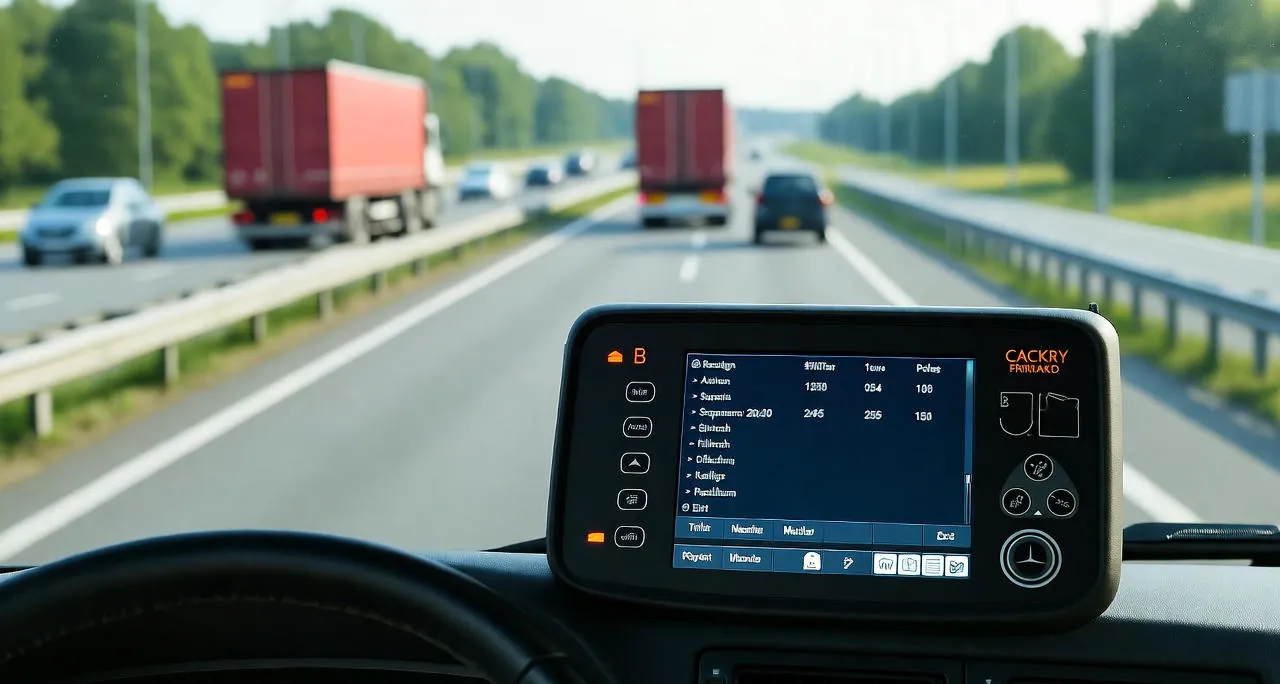
With TachoTools, raw .DDD tachograph files are instantly converted into dynamic, high-fidelity intelligence. Our platform deconstructs complex driving sequences, mandatory breaks, and rest cycles, providing fleet managers with total operational control while ensuring strict adherence to European cross-border regulations.
High-Performance Data Processing
Human error in manual data handling is a significant legal liability. TachoTools eliminates this risk through intelligent parsing engines. Information is transformed into actionable metrics, peer-to-peer driver comparisons, and longitudinal performance reports. Every data point is updated in real-time, facilitating a transition from reactive firefighting to strategic decision-making.
The Pillars of Smart Logistics
Smart mobility is the backbone of a transparent and sustainable transport ecosystem. By integrating TachoTools, fleets move beyond simple record-keeping into a fully connected and automated environment:
- Automation: Drastic reduction of manual administrative overhead and data entry.
- Role-Specific UX: Visual data intelligence tailored for both drivers and back-office managers.
- System Interoperability: Seamless API potential for FMS, ERP, and HR platforms.
- Smart Alerts: Predictive notifications for potential infringements before they occur.
- Ubiquitous Access: Secure cloud-native architecture accessible from any global location.
- Legal Integrity: Immutable digital archiving compliant with EU storage laws.
Compliance as a Competitive Advantage
Our platform guarantees seamless alignment with EU Regulation (EC) 561/2006. By automating the analysis of driving and rest time laws, TachoTools reduces the friction between departments, optimizes cross-border coordination, and significantly lowers the administrative costs associated with legal audits.
Future-Proofing Your Transport Business
Smart mobility is essential for remaining competitive in an increasingly regulated market. Implementing TachoTools is a commitment to a proactive digital strategy—one that connects people, vehicles, and data in a single, real-time decision-making flow.
Smart mobility, in practice, means deciding where the rest falls
Strip the word "smart" of its marketing and what's left is one operational question that recurs every single week: where will this driver be when the rest is due? Everything else in a connected fleet ultimately serves that.
Because the rest itself isn't negotiable — but its location is entirely a matter of planning, and it is decided hours before it becomes a problem. The same nine hours taken at a proper truck stop and taken in a lay-by cost the same in time and nothing alike in everything else: security of the load, whether the driver actually sleeps, and whether the next day starts on schedule.
Which is why the most valuable output of any mobility system isn't a compliance score. It's a sentence: "at this rate, the break lands at 14:40, somewhere around junction 12." That sentence, available at nine in the morning, changes the route. The same information at half past two changes nothing.
Travelling to the vehicle is not rest
The provision that catches out flexible operations more than any other, and it's easy to miss because nothing about it looks like driving. Under Article 9 of Regulation (EC) 561/2006, travelling to a vehicle that is not at the driver's home or the employer's operational centre does not count as rest — whether the driver is at the wheel or a passenger.
That describes a great deal of what "smart mobility" actually looks like day to day: vehicles left at customer sites, swapped mid-route, collected from a workshop. The morning spent getting there gets logged as free time and arithmetically isn't, and by the time the analysis shows it the week has closed.
For planning the fix is small and effective: count the repositioning before the week is built, not after the download shows the daily rest no longer fitted. It's also the clearest example of why mobility planning and hours compliance aren't two separate subjects.
One number worth watching: how often the plan survives contact
Fleets measure infringements. Far more useful, and almost nobody tracks it, is how often the planned rest location is where the rest actually happened.
The reason is that this single figure diagnoses the planning rather than the driver. A run where the rest lands somewhere unplanned once is a bad day. The same run missing its planned stop three months running is a schedule that was never realistic — and no amount of driver briefing will change it.
It is also the number that makes the case to a customer, because it is specific and hard to dismiss. "Your slot forces our drivers into an unplanned stop on four runs out of five" is a fact with a remedy attached: a different time window, or a different rate for the one that exists.
In short
Smart mobility isn't about seeing more. It's about knowing at nine in the morning where the rest is going to fall — and having the credit, the compensation owed and the repositioning time already counted in.
The rules that let you move a rest without losing it
There is more flexibility built into the rules than most planning uses, and it goes unused mainly because nobody is tracking it. Three provisions matter for mobility:
- Reduced daily rest is permitted, within limits, and counting how many have been used is the whole trick — the fourth one arrives without warning if nobody is keeping score.
- The ferry and train rule allows a daily rest to be interrupted for boarding and disembarking, under conditions that must be met exactly. Exceed them and the rest doesn't count as shortened; it doesn't count at all.
- Reduced weekly rest must be compensated, and by a deadline that appears on no display in the cab.
All three are the same kind of thing: credit that has to be tracked, not permissions that apply themselves. A dashboard that shows what has been used and what is still owed turns them into planning options. One that doesn't leaves them as traps.
⚙️ End-to-End Automation
Convert raw .DDD files into professional audit reports without manual intervention. Eliminate the cost of human error.
📈 Regulatory Precision
Monitor the legal status of your entire fleet with automated alerts configured by work center or vehicle type.
🌐 Global Ecosystem
Unify international branches and diverse sub-contractors under a single, secure, and encrypted cloud vault.
Lead the Digital Shift
Harness the power of Smart Mobility to protect your business from penalties and optimize your fleet's daily performance.
Technical Resources: DDD File Specs | Infringement Guide | API Access